
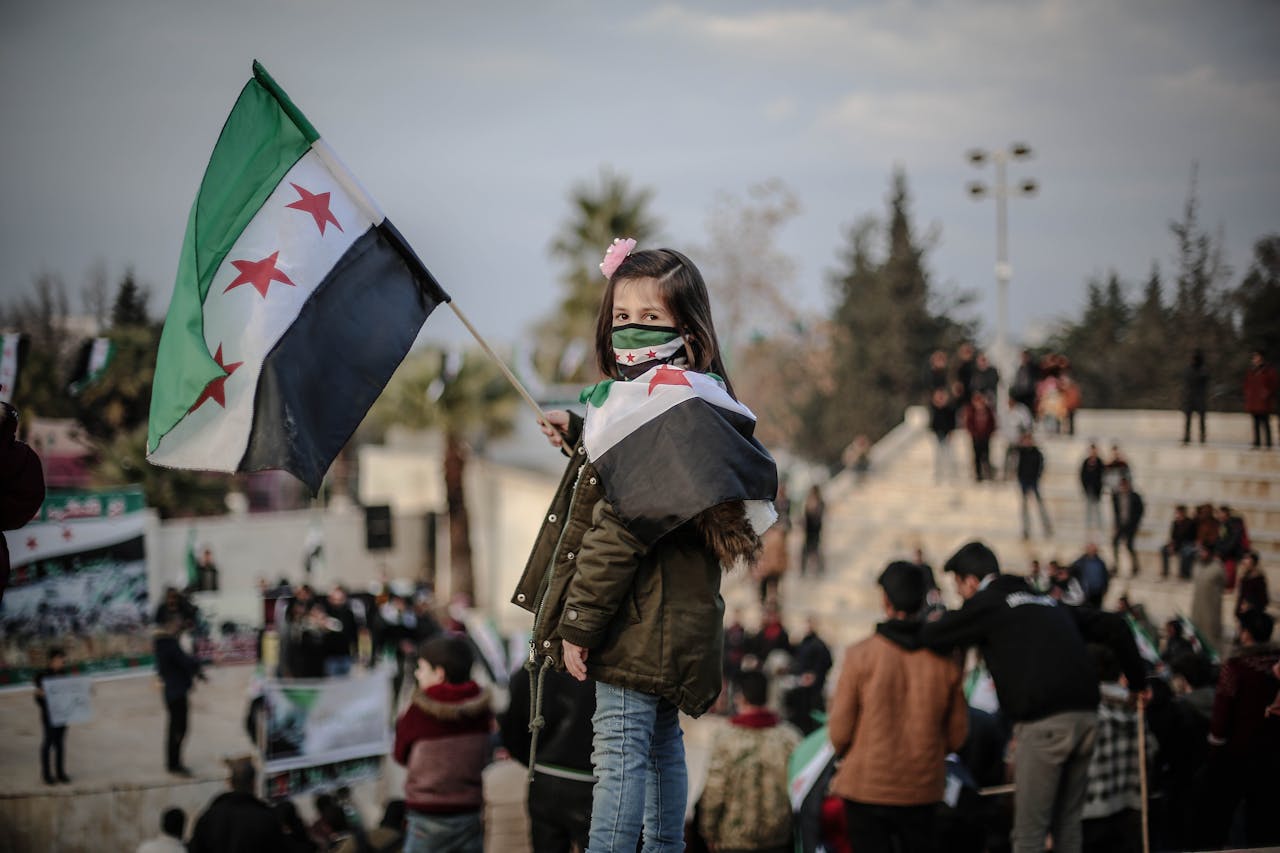
The Syrian civil war, which began in 2011, has evolved into a complex conflict involving various domestic and international actors. The government, led by Bashar al-Assad, has regained control over most of the country, but instability and conflict persist in certain areas.
Historical Context
Syria’s history is marked by a series of foreign occupations and rule, from the Ottomans to the French Mandate following World War I. This colonial legacy shaped the country’s national identity and political landscape. After gaining independence in 1946, Syria experienced a series of coups and political instability. The Ba’ath Party, founded in the 1940s, espoused Arab nationalism and socialism, eventually taking power in a coup in 1963.
In 1970, Hafez al-Assad, a member of the Alawite sect, seized control and established an authoritarian regime characterized by political repression, a strong security apparatus, and a cult of personality. His rule created a loyal base among the Alawite community but marginalized the Sunni majority and other ethnic groups, sowing the seeds of future discontent.
Political Repression
Under both Hafez al-Assad and later his son, Bashar al-Assad, who succeeded him in 2000, Syria maintained an oppressive political environment. Political dissent was not tolerated; opposition parties were banned, and activists faced imprisonment, torture, or worse. The Ba’ath Party’s monopoly on power stifled any potential for democratic development.
This political repression fostered deep-seated grievances among the population. Many Syrians became disillusioned with the regime’s failure to address their needs and aspirations. The lack of political freedoms and the pervasive culture of fear created a climate where peaceful expression of dissent was nearly impossible.
Socioeconomic Factors
By the early 2010s, Syria faced significant economic challenges. The country had a young and rapidly growing population, with around 60% of Syrians under the age of 30. Economic opportunities, however, were scarce. Rising unemployment, particularly among youth, combined with widespread corruption and mismanagement, exacerbated public frustration.
In addition, a severe drought from 2006 to 2010 devastated rural agricultural communities, leading to mass migration to urban areas. The resulting strain on cities, coupled with rising food prices, created a volatile situation. Many displaced farmers and their families faced poverty and marginalization, which fueled social unrest.
The Arab Spring
The Arab Spring, which began in late 2010 in Tunisia, acted as a catalyst for change across the Arab world. The success of protests in Tunisia and Egypt inspired Syrians to demand reform. In March 2011, peaceful protests erupted in the southern city of Daraa after the arrest and torture of a group of teenagers who painted anti-government graffiti. The protests quickly spread to other cities, with demonstrators calling for the release of political prisoners, an end to corruption, and democratic reforms.
Initially, the regime’s response was to dismiss the protests as the work of a foreign conspiracy. However, as protests escalated and spread, the government resorted to violence, deploying security forces to suppress dissent. The brutal crackdown, which included live ammunition against protesters, only intensified public outrage.
Escalation of Violence
The Syrian civil war – As the regime’s violence escalated, protesters began to arm themselves in self-defense. By mid-2011, the situation had transformed from peaceful demonstrations into armed conflict. Defections from the military and the establishment of the Free Syrian Army marked a shift toward organized resistance against the Assad regime.
The conflict quickly became more complex, with various factions emerging. Opposition groups ranged from secular to Islamist, and the absence of a unified command made it difficult to present a coherent front against the regime. The involvement of ethnic and sectarian identities further complicated the conflict, as many groups sought to protect their interests in the face of a deteriorating situation.
Sectarian Divides
Syria’s population is diverse, with Sunni Muslims constituting the majority, while the Alawite minority, which includes the ruling Assad family, holds significant power. Other ethnic groups, such as Kurds and Christians, also inhabit the country. The regime’s reliance on Alawite loyalists for military support deepened sectarian divides.
As violence escalated, many Sunni communities began to view the conflict through a sectarian lens, seeing the Assad regime as an oppressor. Conversely, Alawites and other minorities feared for their safety in a post-Assad Syria. This cycle of mistrust and fear contributed to the fragmentation of the opposition and the escalation of violence.
International Involvement
The Syrian conflict attracted significant international attention and involvement. Initially, regional powers like Turkey, Qatar, and Saudi Arabia provided support to various opposition groups, each pursuing its own agenda. Iran, in contrast, remained steadfast in its support for the Assad regime, viewing Syria as a critical ally in the region.
The conflict also drew in major global powers. The United States and European countries imposed sanctions on the Assad regime and called for its ousting, but their response remained limited. Russia, on the other hand, provided military and political support to the Assad regime, viewing Syria as a key ally in the Middle East https://raginigaur.in/middle-east-update/.
As the conflict progressed, the rise of extremist groups, including ISIS, further complicated the landscape. The emergence of these groups shifted the focus of the international community, as they posed a broader threat beyond the Syrian conflict.
Humanitarian Crisis
The ongoing war has led to a devastating humanitarian crisis. Millions of Syrians have been displaced internally and as refugees in neighboring countries and beyond. The UN estimates that over half of the pre-war population has been affected, with widespread destruction of infrastructure and communities.
Access to basic necessities, such as food, water, and healthcare, has become increasingly limited. The humanitarian needs are staggering, with countless civilians caught in the crossfire of an unending conflict.
Conclusion
The Syrian Civil War is a product of deep-rooted historical grievances, authoritarian rule, socioeconomic challenges, and the influence of external actors. What began as a popular movement for democratic reforms morphed into a brutal conflict, characterized by fragmentation, sectarian divisions, and international involvement.
As of now, the conflict remains unresolved, with ongoing violence, shifting alliances, and a humanitarian crisis that continues to unfold. Understanding the origins of the Syrian Civil War requires recognizing the interplay of these complex factors, as well as the profound impact on the lives of millions of Syrians. The path to peace and reconciliation remains fraught with challenges, making it essential to address the underlying issues that sparked the conflict in the first place https://edition.cnn.com/world/live-news/israel-iran-attack-war-lebanon-10-06-24/index.html.